

Why greenery, natural light and a sense of calm are quietly influencing property values and buyer decisions
Walk into the right property and something just feels like it slots into place in your life.
It is not always the layout, the finish, or even the view at first glance. There is simply a sense of ease. A feeling that you could stay a while. That subtle reaction, often hard to put into words, is increasingly becoming one of the most powerful drivers in property.
And more often than not, it comes down to something deceptively simple: greenery.
The quiet rise of the “green premium”
Across the market, properties that incorporate natural elements are consistently outperforming those that do not.
Whether it is landscaped surroundings, mature trees, or thoughtfully integrated outdoor spaces, homes that connect to nature tend to attract stronger interest and, in many cases, command higher prices. Research into what is known as biophilic design points to a clear pattern. Buyers place greater value on spaces that feel healthier, calmer, and more connected to the outdoors.
In practical terms, this translates into increased demand, stronger offers, and a more resilient long-term value.
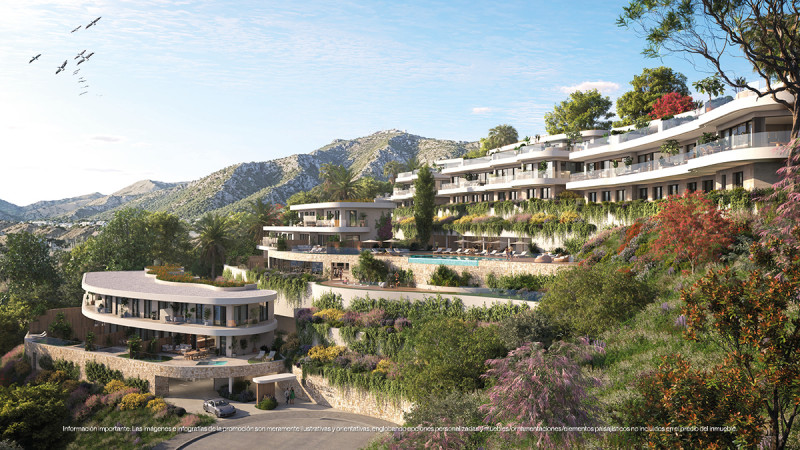
It is why you will notice that many new build developers are now prioritising their communal areas with trees and gardens to make their projects look inviting and feel more attractive for prospective buyers.
Why it works: emotion before logic
Property decisions are rarely made on logic alone.
A buyer may justify a purchase based on size, location, or specification, but the decision itself is usually made much earlier, often within moments of stepping inside. That decision is emotional.
Greenery plays directly into this. Natural elements soften spaces, reduce visual noise, and create a sense of balance. They make a property feel lived in, even before it is. The result is subtle but powerful. Buyers do not analyse it but they will respond to it if it is done correctly.
They stay longer, imagine more and commit faster.
Small details, disproportionate impact
There is a common assumption that this effect requires expansive gardens or large plots. In reality, relatively small details can shift perception significantly.
A well-composed terrace with planting. A living space framed by green views. The presence of light, air, and a visual connection to the outside. Even within apartments, these elements can elevate a property from functional to desirable.
It is not about abundance, but intention.
A natural advantage in locations like Las Colinas and Marbella
In developments such as Las Colinas Golf or areas like Marbella on the Costa del Sol this dynamic becomes even more pronounced.
Here, the integration of nature is not an afterthought. It is central to the design. The landscape, the spacing between properties, and the views across greenery all contribute to an environment that feels considered and calm.
Buyers are not simply comparing square metres. They are responding to a lifestyle that feels distinct. That distinction is what underpins both demand and long-term value.
Scarcity plays its part as well. Environments that combine privacy, design, and natural surroundings at this level are limited. And the market tends to recognise that.
What this means in practice
For buyers, it is a reminder to look beyond the obvious. Properties that offer a genuine connection to nature tend to hold their appeal, not just emotionally, but financially.
For sellers, it presents an opportunity. Thoughtful presentation, particularly when it comes to outdoor spaces and greenery, can materially influence how a property is perceived. It can be the difference between interest and intent.
Because ultimately, buyers are not just assessing a property.
They are responding to how it makes them feel.
A more considered way to sell
So, can a plant sell a property?
Not in isolation. But the environment it helps create can shape perception, influence emotion, and quietly tip a decision.
In a market where many properties compete on similar terms, that edge is not insignificant. It is often the difference between a property that is viewed and one that is remembered.
And in many cases, the property that is remembered is the one that sells.


