

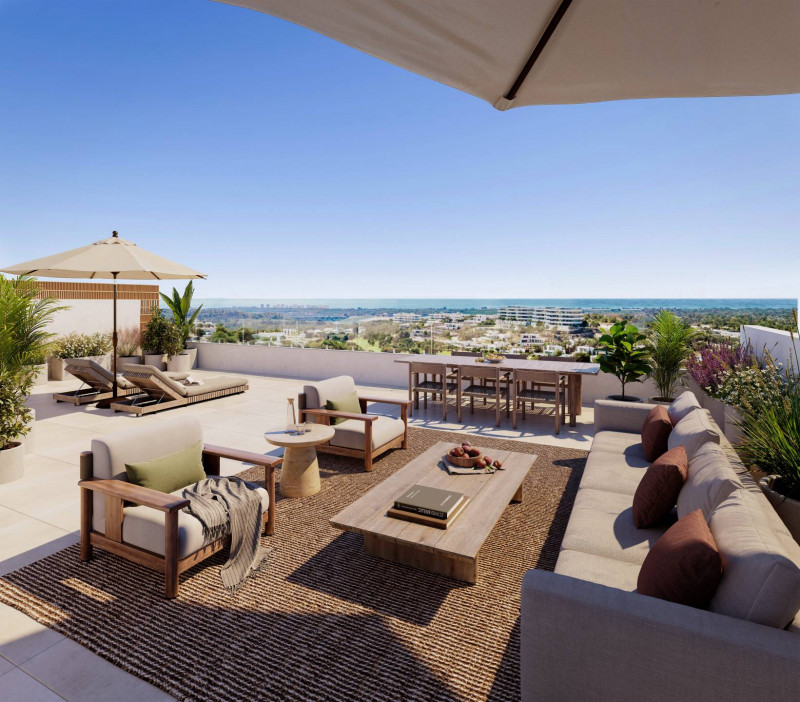
Create an outdoor space you'll enjoy every day, whatever the season
A terrace is one of the best parts of owning a home in Spain. For much of the year, it becomes an extra room - somewhere to eat, read, work, entertain or simply enjoy the weather.
You do not need a huge terrace to make it useful. With the right furniture, a few plants and some thought about shade, even a smaller balcony can become one of the most enjoyable parts of the property.
Decide what the terrace is for
Before buying anything, think about how you will actually use the space.
Some people want a proper dining area for family meals and guests. Others would rather have a comfortable sofa, a coffee table and somewhere to read. On a larger terrace, you may have room for both, but on a smaller one it is usually better to choose one main purpose.
Trying to fit too much into the space often makes it feel smaller.
Choose furniture that can handle the climate
Outdoor furniture in Spain has to cope with strong sun, heat, dust and occasional heavy rain.
Aluminium, synthetic rattan and treated wood are all practical choices. It is also worth choosing cushions with removable covers, especially if the terrace is used regularly.
Very dark cushions can become hot in summer, while very pale fabrics may show dust more easily. Neutral colours such as beige, stone, olive and soft grey usually work well and are easy to update with smaller accessories.
Make shade a priority
A terrace without shade can become difficult to use during the hottest months.
A parasol is often the simplest option, particularly on an apartment terrace. Retractable awnings and pergolas give more coverage, but you may need permission from the community before installing anything permanent.
It is worth checking where the sun falls during the day before deciding where to place the dining table or seating area.
Add plants, but choose carefully
Plants make a terrace feel softer and more established, but not every plant will cope well with direct sun and long periods without water.
Olive trees, lavender, rosemary, bougainvillea, jasmine and succulents are all common choices for terraces in Spain. Citrus trees can also work well in larger pots.
A few larger pots usually look better than lots of small ones. They are also easier to water and create more impact without making the terrace feel cluttered.
Use lighting to make the terrace work in the evening
Most terraces are used just as much after sunset as during the day.
Table lamps, lanterns and soft wall lighting create a more relaxed atmosphere than one bright overhead light. Rechargeable outdoor lamps are particularly useful if there are not many electrical points.
Warm lighting generally works best. Cool white lighting can make the space feel harsh.
Keep the layout simple
The most successful terraces are often the simplest.
Leave enough space to move around comfortably and avoid pushing too much furniture into every corner. An outdoor rug can help define the seating area, while a large planter or lantern can add interest without taking up too much room.
Storage is also useful. A weather-resistant bench or storage box gives you somewhere to keep cushions and smaller items when the property is not being used.
Add a few personal details
A terrace should not feel like a furniture showroom.
Cushions, ceramics, candles, a tray or a few well-chosen pots are often enough to make it feel personal. These details can also be changed easily without replacing the larger pieces.
There is no need to finish everything at once. It is often better to live with the space for a while and see how you naturally use it.
Make the most of the outdoor space
Whether it is a small balcony, a roof terrace or a private garden, outdoor space adds real value to a home in Spain.
The aim is not to fill it with furniture, but to make it comfortable enough that you actually use it. Good shade, practical seating and a few plants usually make the biggest difference.
At Portfolio Deluxe, we represent homes across Costa Blanca and Costa del Sol with a wide range of outdoor spaces, from apartment terraces to private gardens and rooftop solariums.


